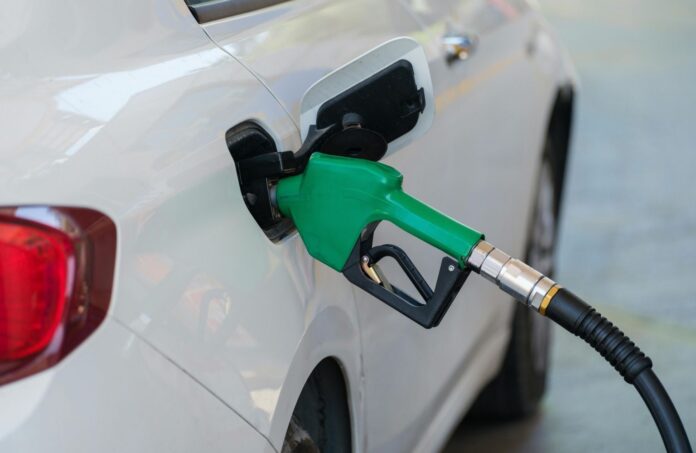
Voorhees-based AAA reports that the national average for a gallon of regular gasoline jumped nearly 27 cents since last week to $3.25, and New Jersey’s gas prices rose 21 cents at the same time. The state’s gas price rose by 27 cents over the past month.
Among all states, the Garden State ranks 34th in the largest price jump over the last week.
This is due to the conflict in the Middle East, which has increased crude oil prices to the mid-$70/barrel range.
The last time the national average made a similar weekly jump was in March 2022, during the beginning of the Russia/Ukraine conflict.
On March 5, the national average is $3.25, compared to $2.98 one week ago, $2.89 one month ago and $3.10 one year ago.
While gas prices declined in New Jersey as 2025 ended, the gas tax rose to start 2026 before the conflict started. The Department of the Treasury announced on Dec. 1, 2025, that the state’s tax rate would rise by 4.2 cents per gallon on Jan. 1, 2026, to support the state’s Transportation Trust Fund (TTF) program.
The nation’s top 10 most expensive gasoline markets are California ($4.81), Washington ($4.44), Hawaii ($4.43), Oregon ($4.04), Nevada ($3.87), Alaska ($3.72), Arizona ($3.58), Illinois ($3.36), Pennsylvania ($3.35) and Michigan ($3.27).
According to new data from the Energy Information Administration (EIA), gasoline demand decreased last week from 8.73 million b/d to 8.29 million. Total domestic gasoline supply decreased from 254.8 million barrels to 253.1 million. Gasoline production increased last week, averaging 9.3 million barrels per day.
At the close of March 4’s formal trading session, WTI rose 10 cents to settle at $74.66 a barrel. The EIA reports crude oil inventories increased by 3.5 million barrels from the previous week.
At 439.3 million barrels, U.S. crude oil inventories are about 3% below the five-year average for this time of year.
The national average per kilowatt hour of electricity at a public EV charging station stayed the same at 39 cents.