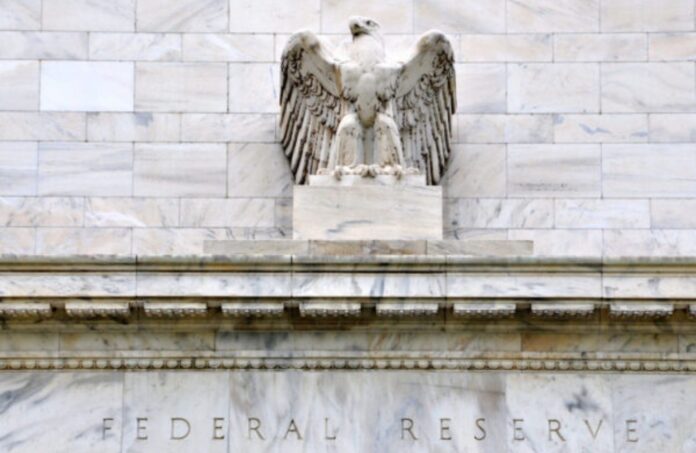
The Federal Reserve on March 18 left its benchmark interest rate unchanged, the second straight pause by the central bank this year.
In its policy statement, the Fed said, “Uncertainty about the economic outlook remains elevated. The implications of developments in the Middle East for the U.S. economy are uncertain. The Committee is attentive to the risks to both sides of its dual mandate (achieving maximum employment and inflation at 2%).”
Based on its outlook, the Fed chose to maintain the federal funds rate — what banks charge each other for short-term loans — in its current range of 3.5% to 3.75%.
The decision to keep rates steady was expected by investors. Fed officials indicated they still expect to trim their key rate once in 2026, the same projection as in December. By keeping their forecast for a rate cut this year and next, policymakers are indicating that the spike in energy prices from the Iran war will not have a lasting effect on inflation and the economy.
Even so, the equity markets, which were down from the start of trading, slid lower after the Fed announcement. The benchmark Standard & Poor’s 500 was down 91.39 points, or 1.4%, to 6,624.70, the Dow Jones Industrial Average shed 768.11, or 1.6%, to 46,225.15, and the Nasdaq Stock Market lost 327.11, or 1.6%, to 22,152.42.
The central bank released new economic forecasts on March 18, and it expects inflation to climb to an annual rate of 2.7% by the end of 2026, above its prior estimate of 2.4%. A possible inflation concern was raised on March 18 when the Labor Department reported that its producer price index, which measures inflation before it hits consumers, rose 3.4% in February on an annual basis, the largest increase in a year.
Besides possible inflation concerns from a surge in energy prices, the central bank is also grappling with an uncertain job market. The U.S. lost 92,000 jobs in February that surprised economists.