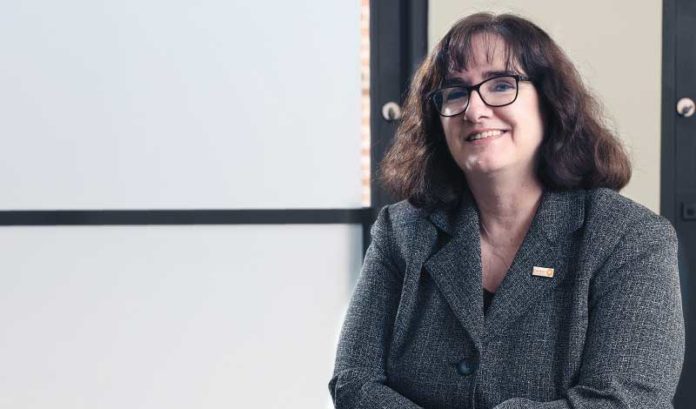
Linda Czipo said she and her three colleagues already had it tough enough helping the more than 30,000 nonprofit organizations and 314,000 employees in New Jersey more effectively fulfill their 501(c)(3) missions.
“We provide nonprofits with the various tools and resources necessary to help further their own capacities,” Czipo, the CEO and president of the Center for Non-Profits in Mercerville, said.
Now, the statewide association of more than 350 nonprofits — which has been providing policy and advocacy work and education to the sector for more than 35 years — will have an even harder go of it in the wake of the passing of the Tax Cuts and Jobs Act last week by both the U.S. Senate and the House of Representatives.
“The impact that this tax reform will have on our state and local governments’ abilities to fund key programs will further exacerbate the stressors and demands already being placed upon nonprofits,” Czipo said.
Coping with ever-changing regulatory and economic environments in the nonprofit sector, however, is something she understands well.
Czipo began working at the Center for Non-Profits more than 30 years ago, after earning her bachelor’s degree in political science at Rutgers University. She has served in the role of executive director of the organization for more than half of her career.
Here’s what she had to say:
ROI-NJ: While there are challenges in every industry, what in particular makes it so difficult to operate within the nonprofit sector these days?
Linda Czipo: Our biggest challenge right now, which has been going on for a number of years, is that the demand for nonprofit services and programs keeps increasing. Every year, when we survey the nonprofit community in New Jersey, nearly 80 percent of our respondents tell us that the demand for their services went up and they fully expect the demand to continue rising in the years to come. Unfortunately, the resources needed to continue meeting those needs, funding and otherwise, are not keeping pace.
Additionally, as the government has scaled back on its own role in providing services, it has offloaded many of those burdens and expectations onto nonprofits. Again, without providing the resources needed to actually fulfill those needs.
This chronic underfunding and under-resourcing of the nonprofit community will require some further education and myth-busting to get beyond.
ROI: I understand that the repeal of the Johnson Amendment — a 1954 law prohibiting charities and churches from getting involved in political campaigns — was removed from the final tax reform bill.
LC: That was a small, but very important bit of good news. It could, of course, resurface at any time, considering that, within the past year, there also have been efforts to sneak it into the appropriations bill by forbidding the IRS to use appropriated money to enforce the law. We’re going to watch it very closely.
But there is a lot more that concerns us about the (Tax Cuts and Jobs Act). With the raising of the standard deduction, for example, fewer people will now be able to deduct charitable gifts. The nearly 30 percent of taxpayers across the country who currently itemize will shrink to nearly 5 percent under this new (law). The threshold for the estate tax also is being doubled, which will reduce the incentive to engage in legacy gifts and result in a dramatic drop in bequests to charity. An estimate provided by Indiana University’s Lilly Family School of Philanthropy states that charitable gifts are expected to drop by $13 billion each year across the country.
ROI: That is a huge loss. What positives are you looking to right now in this time of crisis?
LC: One of the things that has been really encouraging is how much more involved and engaged nonprofits have become in public policy. To be clear, a number of nonprofits have been involved in advocacy efforts for a long time, but I’ve seen quite a spike in recent interest. It’s important that nonprofits have a stronger voice in shaping the policies that affect their ability to work and to serve the people that they do. Organizations are now attaching a heightened importance to engaging with public policy, making it as important as fundraising or the programs they provide.
There is a great need for the work that nonprofits do, not only from a social perspective, but also nonprofits are an important part of the economy. The contribution that nonprofits make while also contributing to the public good is substantial, with the nonprofit sector continuing to pump more than $38 billion into the New Jersey economy.
Nonprofits in New Jersey also provide everything from education to mental health services and from environmental protection to cultural enrichments. These are the things that make communities more livable and improve the quality of life for all New Jerseyans while often factoring into corporate relocation decisions when for-profit businesses are deciding where they are going to move.
ROI: Speaking of business, how can New Jersey companies step up their efforts to assist the nonprofit community?
LC: Partnerships with companies with programmatic synergies are critical, as are donations of various kinds, monetary or otherwise, including supplies and skill-based volunteers. There are a number of organizations in the state that can help to match nonprofits with volunteers in the for-profit community — in fact, that is a great way to become familiar with what nonprofits do, and may provide pathways to additional levels of involvement. Nonprofits are always looking for good board members, for example, so businesses should encourage their personnel to become involved with nonprofits first as a volunteer or a committee member, and then work their way up by being an ambassador for the causes that they care about.
ROI: What will the Center for Non-Profits be focusing on within the next year?
LC: We are just wrapping up our strategic plan for the next three years, and one of our key focuses will be to increase our capacity so that we can fulfill even more of what organizations are asking of us. We need to make sure we have the continued ability to convene nonprofits and their stakeholders in much more strategic ways at the local and regional levels. While we host a statewide conference every year, we’ve been told very clearly that our members would like to see more of that. We also want to be able to improve nonprofits’ access to capital and other resources.
We also are conducting a few research projects to make sure that we continue to educate the policymakers and people in positions of leadership about what is going on in the community. For example, we will release in the first half of 2018 a salary and benefits survey, with an eye toward diversity and leadership pathways in the nonprofit community.
We’ll see how it bears out in our survey but, as it stands, most CEOs and executive directors of nonprofits are currently female. That, however, can vary depending on the size and type of organization. I believe, as budget size grows, statistics show that the CEOs of those organizations are more likely to be male and white. That is something we will carefully look at to see that the leadership pathways in the nonprofit community are what they should be. Is compensation also equivalent to what it should be? In years past, there has most certainly been a pay gap between what male and female executive directors have made.
ROI: That seems like an awful lot of work for a four-person staff. How are you managing?
LC: I’m putting in pretty extensive days this time of year, what with us just hosting our annual statewide conference, our advocacy and public policy work in regard to the proposed tax reform and participating in those year-end activities that charities do.
It’s a challenge, because I also want to model good behavior. I stress with my colleagues to make sure that they are not overdoing it because it is very easy these days to burn out that way. We’ve also devoted some of our attention and resources to webinars and blog posts about stress reduction and management because that is something we also have seen more of in the nonprofit community. Between the regulatory environment, resource depletion and financial uncertainty, stress levels, while probably not unique to nonprofits, are certainly on the rise.
ROI: How, then, are you working to recruit young, new talent into the sector?
LC: Nonprofits can provide very fulfilling career paths. One of the things we as nonprofits must do a better job at is busting that whole myth that nonprofits mean you can’t make a profit or need to take a vow of poverty to work for one. We need to make sure that there is just as much expectation as for-profits to attract and retain good people by paying them adequately, by allowing them a reasonable work-life balance and by providing good benefits and good places to work.
One of the most fulfilling things about working in a nonprofit is that you are working on something much bigger than yourself. You exist to serve the public purpose of making our society and our communities better, often fulfilling very critical missions. But people can’t live on that alone. We don’t want to have talented rising stars come in, work for a few years and then discover that they can’t afford to stay because they can’t afford a mortgage.
The myth of having to divert money from the mission to pay a decent salary has been one of those myths that have been years, if not decades, in the making. We as a collective community must do a better job of making sure that all our stakeholders, policymakers, donors, board and staff members share the same vision that any for-profit would. Pay people decently, provide good work environments and people will want to stay and work for you.
Read our interviews
- Shelley Brindle, mayor-elect of Westfield
- Linda Czipo, Center for Non-Profits
- Anna Marie Gewirtz, State Theatre New Jersey
- Gurbir Grewal, attorney general nominee
- Ali Houshmand, Rowan University
- Eric B. Levine, Lindabury, McCormick, Estabrook & Cooper
- Jose Lozano, Murphy transition team
- Kevin McCabe, Carpenter Contractor Trust
- Ralph Thomas, New Jersey Society of CPAs
- Andrew Zwicker, state Assembly