
Before New Jersey had customers willing to brave long waits to make the state’s first legal cannabis purchases, law firms had attorneys lining up to lead these new businesses (and the ones they’re working with) through the involved regulatory and legal process.
Two and a half years later, those law firms say demand for their services in this budding area is still at a high. And they’re glad to have established practices when they did.
In 2021, New Jersey delivered on a long-promised legalization of cannabis. In the years leading up to that, a majority of the state’s law firms decided to stake a claim as go-to legal advisers in the adult recreational use (and medicinal use) marijuana marketplace.

John Fanburg co-chairs Brach Eichler‘s cannabis practice, which the Roseland law firm launched in 2017 to prepare for the state’s legalization push. That process ended up being slower than anticipated, as has been some of the rule-making around it.
But, Fanburg said, the slow roll of the market — and the questions and overall uncertainty along the way — have continued to keep cannabis practices busy. And it’s worth having a local view as a local firm, because New Jersey has also developed its program differently than other states with legal cannabis.
“Our adult recreational-use market has several features that are not necessarily common to other states with programs,” he said. “One of those is home delivery, which hasn’t gotten a real footing yet. The Cannabis Regulatory Commission is still working on license applications for that. Another is lounges for recreational use. As those roll out, which has happened perhaps slower than those in the industry want, that’s going to enhance the market and change the dynamics.”
Fanburg added that New Jersey is still on the cusp of bringing in these additional features, which means the full impact — such as how much home delivery impacts the retail side of the industry — is still unknown.
That editing of the state’s cannabis market could continue for years. Given that, and its status as a highly regulated industry, there’s a good reason every law firm of a certain size has developed a product line in this area, Fanburg said.
“Whether they’re all making money on it or not, I’m not sure,” he said. “Certainly, some law firms are busier than others.”
Cannabis-focused attorneys are still working with clients on setting up licensing, applications and financing. A lot of cannabis businesses are also exploring their real estate options right now.
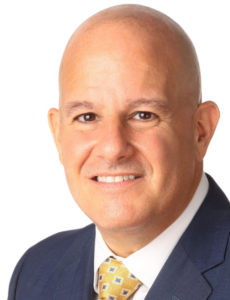
Joshua S. Bauchner, chair of the Cannabis and Psychedelics Practice Group at Mandelbaum Barrett P.C., said there are upwards of 1,700 conditional licenses for cannabis dispensaries in New Jersey that don’t have a location to set up shop.
There’s a lot of work involved in making sure they’re following established law in scouting locations. Most municipalities have rules on the books denying entry for these businesses.
“Out of all of New Jersey’s townships, only 30% have allowed it,” Bauchner said. “And, even if they have, to find a location properly zoned for it can be a hurdle, too.”
Cannabis operators have to be mindful of whether potential locations are too close to schools, places of worship or other venues.
“Of course, even if you’ve found that needle in a haystack, debt can be a problem for landlords,” he added. “They may have loan covenants that say they can’t lease a space for a use that violates federal law. And, even if the landlord, and the townships are willing, the banks might not be.”
The financial side of the business remains a legal minefield. Legislative efforts on the federal level billed as the answer to banking woes for cannabis companies have had several false starts.
The latest bill, the SAFER (Secure and Fair Enforcement Regulation) Banking Act, cleared the hump of a Senate committee in September but has faced an uphill climb this fall. It was competing with government shutdown talk and a back-and-forth vote on who would be speaker for the Republican-led House of Representatives.
In the meantime, the continued awkwardness of the cannabis industry’s interactions with traditional finance has led to continued demand for attorneys to get involved.

Max Crane, managing partner at Sills Cummis & Gross, said the need for legal clarity extends to any involved business or vendor.
“What you’re finding is that a lot of institutions, particularly in the financial space, are looking to us for guidance on what they can do, what they can’t and what’s still a gray area that might need to be handled differently than how they usually do business,” he said.
At a time when law firms are valuing industry-specific expertise over more of a generalist perspective, law firms can’t afford not to have attorneys on staff who are in the know, Crane added.
Sills Cummis was another of the law firms that planted a flag in the ground early in New Jersey’s cannabis space. It’s glad to be able to offer an inside track for interested clients today.
“Cannabis is still a very hot, active area of the law,” Crane said. “We expect that to continue to be the case.”
Questions of impairment
It’s not just another acronym: WIRE, or workplace impairment recognition expert. It’s a thing every business in New Jersey — whether it realizes it or not — is being asked to have.
Not all business owners may realize they should be prepared to have someone certified to detect and identify when employees are potentially impaired by cannabis or other substances. In fact, attorney Joshua Bauchner is certain many don’t.
But given that he says all businesses are going to be tasked with having a full- or part-time employee filling this role for the purpose of avoiding workplace accidents, he said, that should change.
“While, in many instances, a law like this might apply to businesses of just a certain size, this one applies to all businesses,” Bauchner said. “Whether you’re a landscaping business with just five employees or a pharmaceutical company with thousands, you have to designate and train someone to serve this role.”
The Mandelbaum Barrett P.C. cannabis law expert feels for the small businesses with no benefit of an HR department — the larger majority of businesses in the state. For them, this new mandate could be a big ask.
And actually making a determination of whether someone is impaired on the job, given the conflicting guidance on the recognition of that, also poses problems.
“It’s challenging, to put it mildly,” Bauchner said. “Impairment, as it’s described, could leave someone tired or energetic; hungry, or with a loss of appetite; sweaty, or with a dry mouth. On its face, none of this is very helpful.”
The New Jersey Cannabis Regulatory Commission is taking charge on developing criteria around this rule, which was first introduced in the adult recreational-use legalization act that went into law in 2021. The act included a requirement that, along with drug testing, a physical evaluation should be conducted by a certified employee to identify potential impairment.
Last fall, the agency issued interim guidance on that. But the agency isn’t enforcing the use of a WIRE until the official certification standards are published.
“Right now, the scrutiny of whether you have someone trained in this on staff, for all intents and purposes, is nonexistent,” Bauchner said. “There’s a lot of work still to be done.”