For decades, careers were defined by a single metaphor: the ladder. Professionals climbed rung by rung toward success, and organizations built systems to support that climb. Today, that model is obsolete. Careers are dynamic, personalized, and shaped by life circumstances. For organizations, this shift is not a challenge to fear but an opportunity.
Companies that recognize and support diverse career trajectories will gain a competitive edge in attracting, engaging, and retaining top talent. At Professional and Executive Education at Rutgers (PEER), we understand this evolution and help organizations turn it into a strategic advantage.
Seven Career Models Organizations Must Embrace
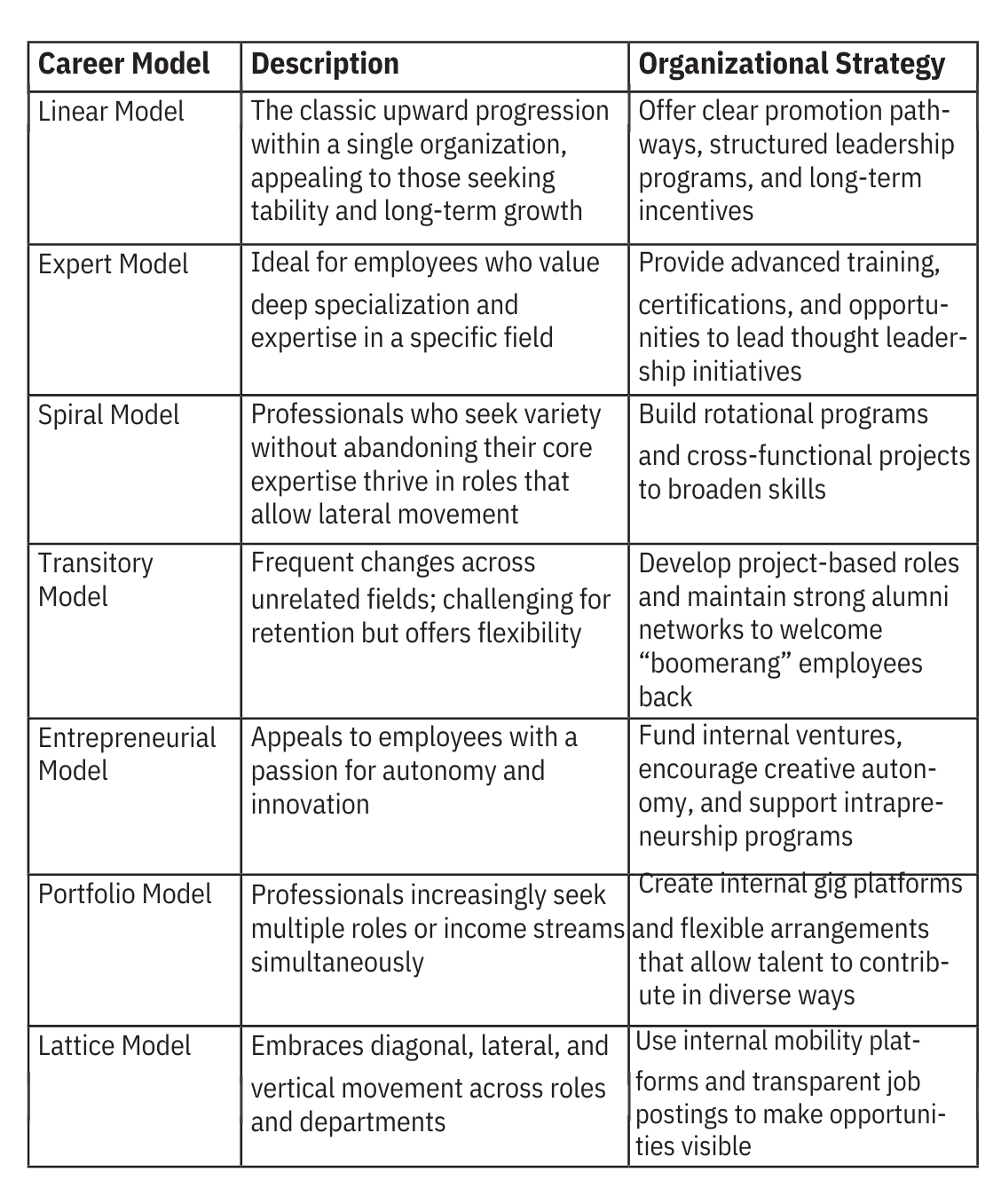
Modern professionals navigate careers through seven major models. Each reflects different motivations and life stages. Organizations that accommodate these models will build stronger, more resilient workforces.
Companies that offer alternative career models consistently see higher retention, stronger engagement, improved morale, greater agility, and enhanced innovation.
A good example of the spiral model is Nike. The company adopted a skills-based, non-linear career pathing model that allows employees to move across roles and departments based on interests and competencies. Their CEO, Elliott Hill, journeyed from sales intern to CEO after holding 14 different roles. At ADP, leadership shifted from career ladders to career lattices, enabling employees to grow through lateral and diagonal moves. This strategy improved retention and innovation by giving employees multiple ways to advance without leaving the company.
Career models are not fixed. They evolve as professionals’ interests and circumstances change. Many early-career professionals may start on a linear path and later shift to lattice or portfolio models due to factors such as industry disruption, burnout, or a desire for better work-life balance. Recognizing when a model no longer aligns with employees’ goals is essential.
How Organizations Can Operationalize Career Flexibility
To support diverse career paths, organizations must establish the right infrastructure and cultivate a culture that embraces and encourages multiple career trajectories.
This starts with investing in career development systems that truly put people first. Personalized learning plans, mentorship opportunities, and AI-driven career mapping tools help employees see clear, flexible futures within an organization.
Organizations should also foster a culture of lifelong learning by embedding continuous development into performance goals and sponsoring employees for certifications that enable growth. Internal mobility must be treated as a success metric; creating internal talent marketplaces and celebrating movement across roles sends a powerful message.
Flexibility matters as well. Hybrid work models, sabbaticals, and phased retirement options significantly affect how supported employees feel. None of these initiatives succeed without psychological safety. Managers must be trained to have open, non-judgmental career conversations so employees feel comfortable exploring what’s next.
Together, these steps create an environment where growth is not just encouraged—it is expected, supported, and celebrated.
Professional and Executive Education: A Strategic Partner for Workforce Development
Professional and Executive Education units housed within higher education institutions have evolved to meet the changing needs of the workforce. The PEER unit at Rutgers School of Business–Camden serves as a strategic partner for organizations seeking to align career growth with diverse career models.
PEER works with private, public, and government organizations through customized learning solutions, certificate programs, and executive education tailored to organizational needs. Personalized coaching models, including PEER’s Personal Learning Coach approach, offer one-on-one guidance for employees navigating career transitions.
PEER also supports cross-generational workforce development, with programs designed for Gen Z, Millennials, Gen X, and Boomers alike. In addition to focused AI programs, AI literacy is embedded across all offerings.
By partnering with Professional and Executive Education at Rutgers, organizations gain access to a robust ecosystem of instructors, alumni, and corporate collaborators. This partnership ensures career development is not just an individual pursuit but a shared organizational priority.
The Bottom Line
The workforce is more diverse than ever before. Organizations that embrace multiple career paths and leverage partnerships with higher education will create cultures where employees thrive and where business goals align with personal aspirations.
Explore what’s possible.
Contact Peter McAliney (peter.mcaliney@rutgers.edu) or visit Professional and Executive Education at Rutgers. We can help you build your workforce for the future.
The career ladder is broken—and that’s a good thing.