SpotitEarly, an early cancer detection startup that uses AI and trained canines to identify cancer odor signatures in breath samples, announced a strategic partnership with the renowned Philadelphia-based Fox Chase Cancer Center, which includes the Institute for Cancer Research and the American Oncologic Hospital and is a part of Temple Health.
SpotitEarly’s partnership with the nationally recognized leader in oncology innovation, with a history of accelerating cancer breakthroughs, includes plans for clinical trials to further validate its test.
Under the terms of the agreement, Fox Chase will lead a multi-year, investigator-initiated clinical trial evaluating the performance of SpotitEarly’s exhaled-breath test in patients undergoing standard-of-care evaluation for suspected lung cancer.
The collaboration combines direct research funding with a long-term strategic partnership model designed to align incentives and accelerate clinical translation, with the potential to expand this research framework to additional cancer indications and future applications beyond the initial lung cancer program.
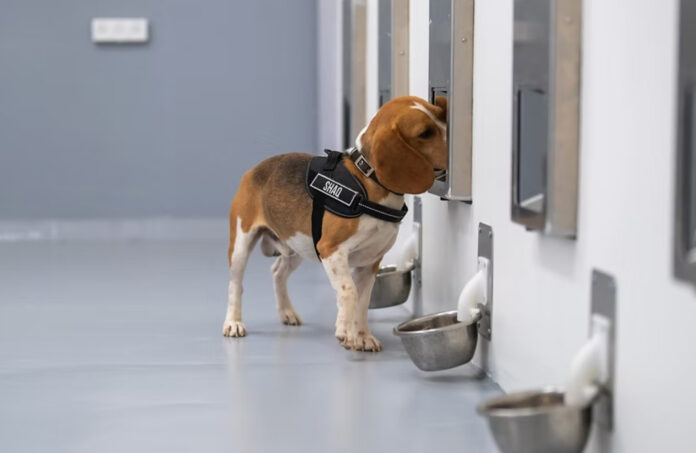
Studies have shown that trained medical scent‑detection dogs can identify cancer samples at rates well above chance. A 2024 review in the “American Journal of Veterinary Research” evaluated research and confirmed that “sniffer dogs” are being studied as early‑detection tools across multiple cancer types.
Tumors release volatile organic compounds (VOCs), and trained dogs can learn to recognize these subtle scent patterns in blood, breath, urine, or tissue samples. Dogs have up to 300 million olfactory receptors (humans have about 6 million), and the part of their brain devoted to smell is proportionally 40 times larger. Their noses can detect VOCs at concentrations as low as parts per trillion.
“At Fox Chase, we are committed to pushing the boundaries of cancer research through bold and collaborative partnerships,” said Dr. Sangeeta Bardhan Cook, chief innovation officer, Fox Chase Cancer Center. “SpotitEarly brings an unconventional yet scientifically promising approach to early detection, and we see tremendous potential in their innovative product and technology when combined with our robust clinical expertise. Together, we will open new doors to earlier diagnoses and, ultimately, better outcomes for patients.”
The news of this collaboration with Fox Chase comes on the heels of SpotitEarly announcing a partnership with Hackensack Meridian Health, New Jersey’s largest health network, along with plans for a series of joint clinical trials in July. The pace and distinction of these U.S.-based partnerships since entering the market in May highlight the growing confidence in SpotitEarly’s approach to early cancer detection.
“Working with Fox Chase Cancer Center was a natural next step for our organization as we continue to grow our footprint in the states,” said Shlomi Madar, CEO of SpotitEarly. “As a leader in cancer research, their team will provide us with access to a vast network of physicians and resources to collaborate on groundbreaking clinical trials and treatments, moving forward our mission of increasing accessibility to early cancer detection technology for millions.”
SpotitEarly’s proprietary LUCID bio-AI hybrid platform combines artificial intelligence and machine learning with trained canine scent detection, using integrated sensors to monitor canine behavioral and physiological signals. These signals are translated into a standardized, repeatable approach for identifying cancer-associated signals in breath, enabling non-invasive screening focused on earlier detection, when treatment options are most effective.
Fox Chase Cancer Center (Fox Chase), which includes the Institute for Cancer Research and the American Oncologic Hospital and is a part of Temple Health, is one of the leading comprehensive cancer centers in the United States. Founded in 1904 in Philadelphia, Fox Chase was also among the first institutions to be designated a National Cancer Institute Comprehensive Cancer Center in 1974.