William Paterson University has been awarded a $2 million, six-year grant from the National Science Foundation (NSF) to continue and expand its Mathematics and Computer Science Scholars (MaCS) Program — an initiative that was launched in 2020 to expand access and opportunity to STEM degrees.
The grant, awarded through the NSF’s S-STEM (“Scholarships in STEM”) program, will provide scholarships and comprehensive academic and career support to 40 low-income undergraduate students majoring in computer science, information technology and mathematics.
The new award builds on the success of the University’s previous MaCS grant, which exceeded its recruitment goal and saw high student retention rates.
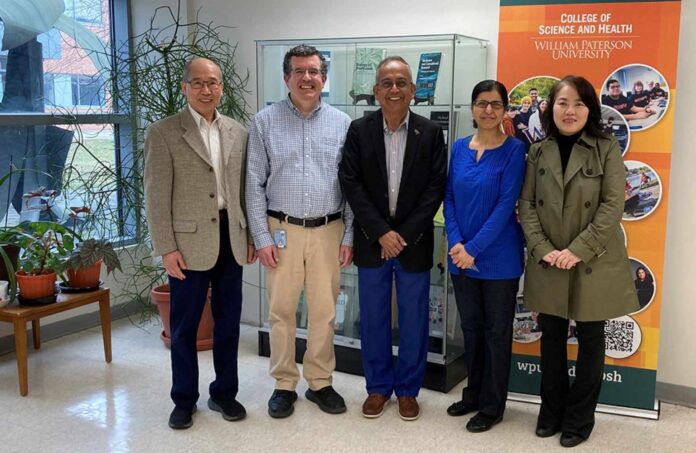
“This highly competitive award reflects the strength of our academic programs, our commitment to student success and the dedication of our faculty leadership,” said Venkat Sharma, dean of the University’s College of Science and Health.
“This second phase of the MaCS program reflects our shared mission to expand opportunity, foster innovation and prepare the next generation of STEM leaders.”
The grant leadership team includes principal investigator Jyoti Champanerkar (mathematics), with fellow professors and co-principal investigators Paul von Dohlen (mathematics), Cyril S. Ku (computer science) and Nan Wang (computer science). Dean Sharma will provide administrative and institutional oversight for the grant.
“The MaCS program has been successful because we have been able to provide students with a support system that includes not only financial assistance but also highly personalized guidance, encouragement and mentoring,” said Champanerkar.
“The goal has been to tailor the experience to each scholar, providing support as needed.”
Phase II of the MaCS program will provide annual scholarships of up to $15,000 per student per academic year for up to four years, along with faculty mentoring, research assistantships, internship opportunities and structured career preparation.
The program is designed to create strong pathways to STEM careers and graduate study while strengthening retention and graduation outcomes. It will also deepen engagement with regional industry partners and expand experiential learning opportunities, further aligning academic preparation with workforce needs.
Industry leaders who are on the College of Science and Health Advisory Council will help guide the program by offering workshops, mentoring and internship opportunities for participating students.