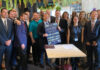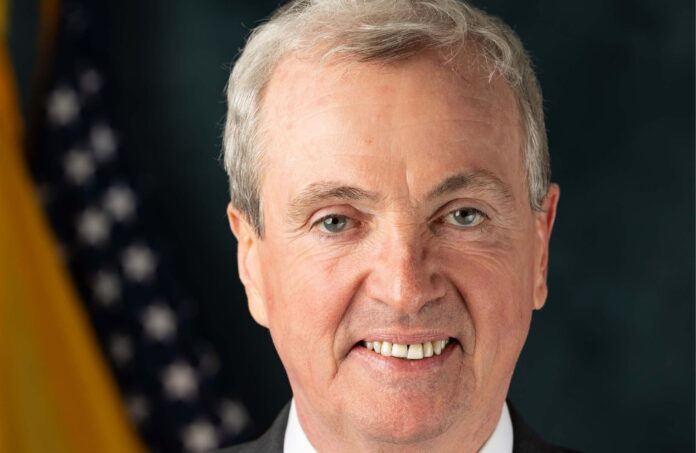
With the Labor Day holiday as a backdrop, Gov. Phil Murphy signed legislation Sept. 3 intended to strengthen workers’ rights across New Jersey.
The first bill promotes knowledge of labor rights through education, and the second safeguards employees’ freedom to make their own choices at work, free from coercion.
“Today, we are honoring the history of the labor movement while strengthening workers’ rights,” said Murphy. “Our actions today will help ensure that students understand the history of labor’s fight for fair wages and safe workplaces, while also promoting respect for our democracy by shielding employees from mandatory political or religious workplace messaging.”
The Murphy administration has been pro-labor since he took office in 2018. Besides supporting an increase in the state’s minimum wage, in May 2018 Murphy forged an agreement with the Communications Workers of America AFL-CIO that gave 35,000 state government workers a 4% total pay hike. That same month, he signed the Workplace Democracy Enhancement Act into law, aimed at bolstering public worker unions in case the U.S. Supreme Court ruled against them in the Janus v. AFSCME case.
“These measures further demonstrate a commitment to supporting labor education and protecting workplace freedoms,” said Robert Asaro-Angelo, commissioner of the New Jersey Department of Labor and Workforce Development. “Integrating labor history into our schools equips future generations with the knowledge and respect for those who have fought and continue to advocate for fair and equitable workplaces.”
The first bill will ensure that the contributions, history, and heritage of labor movements are included in the New Jersey Student Learning Standards for Social Studies for students in grades 6-12. The State Board of Education will be required to adopt standards about the history of labor and labor movements.
School districts will also be required to provide instruction on United States and New Jersey labor history as part of the social studies curriculum, including the history of organized labor, notable strikes throughout history, unionization drives, and the collective bargaining process and existing legal protections in the workplace.
The prime sponsors for this bill are Assembly members Reginald Atkins, Linda Carter, William B. Sampson, and state senators Linda Greenstein and Vin Gopal.
The second bill expands prohibitions on employers concerning requirements for employees to attend or listen to communications related to political or religious matters.
Under the bill’s provisions, employers cannot mandate employees participate in communications about certain political matters, including mandatory meetings regarding the decision to join or support a labor organization. The legislation also allows certain exceptions to protect employer speech, such as the ability to hold voluntary meetings, transmit legally required information, and conduct workplace anti-harassment and anti-discrimination training.
The prime sponsors of this bill are Assembly members Anthony Verrelli, Wayne DeAngelo, Christian Barranco, and state senators Joe Lagana Vin Gopal.