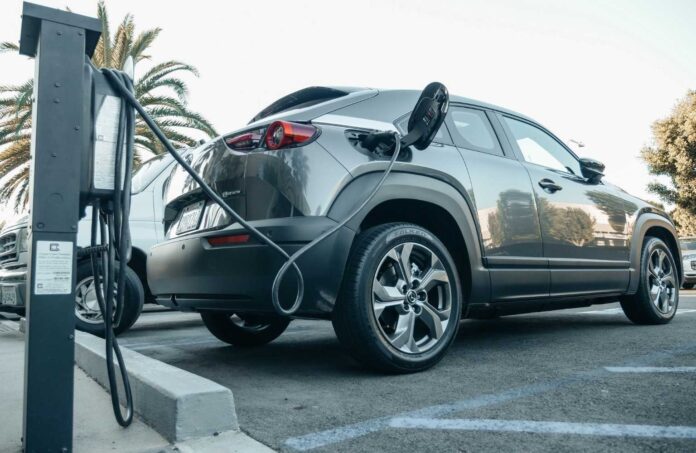
Gov. Phil Murphy announced Sept. 23 that the state has exceeded 250,000 electric-vehicle registrations in what his administration sees as an indication of increasing consumer confidence in EVs’ reliability as well as the availability of accessible charging infrastructure.
New Jersey has seen a 15% increase in the number of EVs registered since December 2024. More than 254,444 EVs are registered with the New Jersey Motor Vehicle Commission, less than 1% of all registered vehicles in the Garden State. As of 2025, New Jersey has more than 6.4 million registered vehicles.
The Murphy administration has implemented some of the nation’s strongest policies to incentivize consumers to go green and ensure the availability of charging infrastructure – leading the country’s transition to electric vehicles to reduce greenhouse gas emissions, improve air quality, and move toward a cleaner, more sustainable transportation future.
“Our policies have taken driving electric from a futuristic concept to a practical choice for drivers – reflected by the exponential growth in registrations,” said Murphy. “By continuing to expand charging infrastructure and cater to consumer preferences by incentivizing electric vehicle purchases, we will reduce the impact of cumulative transportation emissions on our climate for future generations.”
There are more than 1,700 fast-charging ports and 3,300 Level 2 charging ports that are publicly available across New Jersey, with several hundred new ones being added every year.
The registration fee for electric vehicles includes an additional annual fee of $250, effective from July 1, 2024. This fee is payable at the time of initial registration and at every renewal. The fee will increase by $10 each year for the next four years, reaching a maximum of $290 by 2028. Additionally, new EV owners must pay this fee upfront for four years, totaling $1,060 for the first four years of registration.
The Fuel Merchants Association of NJ wasn’t quite as sanguine as the governor about the latest EV registration data.
“The governor crows about ‘consumer confidence’ in electric vehicles by citing the increased number of EVs registered since December 2024. This includes battery electric vehicles (BEV) that use no gasoline and plug-in hybrids (PHEV) that use some gasoline but are primarily powered by electricity. He failed to mention that sales of hybrids – cars that run on an electric motor powered by gasoline and have no plug – outsold BEVs during this same period by 16%,” said Fuel Merchants Association of NJ Executive Vice President Eric DeGesero. “As of June 30, 2025, NJ has registered 217,989 hybrids; 189,603 BEVs; and 55,858 PHEVs. It appears consumers aren’t as confident in EVs as the governor contends.”
Democratic Party candidate for governor Mikie Sherrill strongly supports Murphy’s 2035 clean energy goals. Sherrill has signaled she would continue Murphy’s energy and transportation policies, which include the phase-out of gasoline-powered vehicle sales by 2035.
Republican Party gubernatorial candidate Jack Ciattarelli has emphasized the risks of higher costs for consumers, limitations in EV infrastructure (particularly charging stations), and concerns that banning new gasoline vehicles will hurt working-class families and small businesses. He supports a slower, market-driven transition to cleaner vehicles.